
• Who We Are
    • Firm Overview
    • Our Team
    • International
    • Life at Botwinick
    • Reviews
  • What We Do
    • Accounting
    • Assurance & Attestation
    • Business Consulting & Advisory
    • Contract Compliance
    • Forensic Accounting
    • Tax Compliance & Planning
  • Industries We Serve
    • Contractors
    • Dental Practices
    • Distribution, Logistics, & Warehousing
    • Manufacturing
    • Medical
    • Professional Services
    • Real Estate
    • Retail
    • Sports & Entertainment
    • Tech
  • Work With Us
  • Insights
  • Client Access
  • Contact
  • Client Login
  • Pay Online
  • Visit Our Office
  • LinkedIn
  • Facebook
  • Skip to primary navigation
  • Skip to main content
  • Skip to primary sidebar
    (201) 909-0090
Botwinick Logo
  • Who We Are
    • Firm Overview
    • Our Team
    • International
    • Life at Botwinick
    • Reviews
  • What We Do
    • Accounting
    • Assurance & Attestation
    • Business Consulting & Advisory
    • Contract Compliance
    • Forensic Accounting
    • Tax Compliance & Planning
  • Industries We Serve
    • Contractors
    • Dental Practices
    • Distribution, Logistics, & Warehousing
    • Manufacturing
    • Medical
    • Professional Services
    • Real Estate
    • Retail
    • Sports & Entertainment
    • Tech
  • Work With Us
  • Insights
  • Client Access
  • Contact
  • Show Search
Hide Search

Blogs

Is Your Business Closing? Here Are Your Final Tax Responsibilities

Ken Botwinick, CPA | 11/21/2022

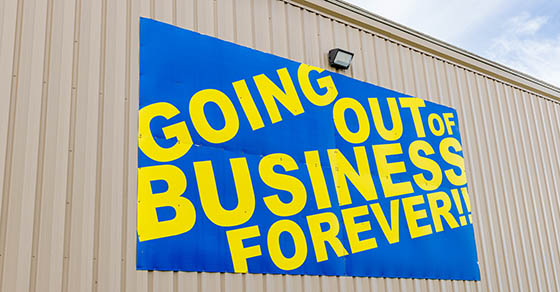
Businesses shut down for many reasons. Some of the reasons that businesses shutter their doors:

  • An owner retirement,
  • A lease expiration,
  • Staffing shortages,
  • Partner conflicts, and
  • Increased supply costs.

If you’ve decided to close your business, we’re here to assist you in any way we can, including taking care of the various tax obligations that must be met.

For example, a business must file a final income tax return and some other related forms for the year it closes. The type of return to be filed depends on the type of business you have. Here’s a rundown of the basic requirements.

Sole Proprietorships. You’ll need to file the usual Schedule C, “Profit or Loss from Business,” with your individual return for the year you close the business. You may also need to report self-employment tax.

Partnerships. A partnership must file Form 1065, “U.S. Return of Partnership Income,” for the year it closes. You also must report capital gains and losses on Schedule D. Indicate that this is the final return and do the same on Schedules K-1, “Partner’s Share of Income, Deductions, Credits, Etc.”

All Corporations. Form 966, “Corporate Dissolution or Liquidation,” must be filed if you adopt a resolution or plan to dissolve a corporation or liquidate any of its stock.

C Corporations. File Form 1120, “U.S. Corporate Income Tax Return,” for the year you close. Report capital gains and losses on Schedule D. Indicate this is the final return.

S Corporations. File Form 1120-S, “U.S. Income Tax Return for an S Corporation” for the year of closing. Report capital gains and losses on Schedule D. The “final return” box must be checked on Schedule K-1.

All Businesses. Other forms may need to be filed to report sales of business property and asset acquisitions if you sell your business.

Duties involving workers

If you have employees, you must pay them final wages and compensation owed, make final federal tax deposits and report employment taxes. Failure to withhold or deposit employee income, Social Security and Medicare taxes can result in full personal liability for what’s known as the Trust Fund Recovery Penalty.

If you’ve paid any contractors at least $600 during the calendar year in which you close your business, you must report those payments on Form 1099-NEC, “Nonemployee Compensation.”

More tax issues to consider

If your business has a retirement plan for employees, you’ll want to terminate the plan and distribute benefits to participants. There are detailed notice, funding, timing and filing requirements that must be met by a terminating plan. There are also complex requirements related to flexible spending accounts, Health Savings Accounts, and other programs for your employees.

We can assist you with many other complicated tax issues related to closing your business, including debt cancellation, use of net operating losses, freeing up any remaining passive activity losses, depreciation recapture and possible bankruptcy issues.

We can advise you on the length of time you need to keep business records. You also must cancel your Employer Identification Number (EIN) and close your IRS business account.

If your business is unable to pay all the taxes it owes, we can explain the available payment options to you. Contact us to discuss these issues and get answers to any questions.

© 2022

Share:
author avatar
Ken Botwinick, CPA Partner, CPA
Ken Botwinick, CPA is a Partner with Botwinick & Company, LLC and has been with the firm for more than 25 years. Ken specializes in providing accounting, tax, and business consulting services to dental and medical practices. He established the firm’s dental practice and is a sought-after lecturer at dental continuing education programs. Ken has his “finger on the pulse of the dental industry,” and with comprehensive experience in ownership transitions, he assists clients in the healthcare industry to reach their professional and financial aspirations and goals.
See Full Bio

About Ken Botwinick, CPA

Ken Botwinick, CPA is a Partner with Botwinick & Company, LLC and has been with the firm for more than 25 years. Ken specializes in providing accounting, tax, and business consulting services to dental and medical practices. He established the firm’s dental practice and is a sought-after lecturer at dental continuing education programs. Ken has his “finger on the pulse of the dental industry,” and with comprehensive experience in ownership transitions, he assists clients in the healthcare industry to reach their professional and financial aspirations and goals.

Primary Sidebar

Related Posts

Botwinick

Maximizing Business Write-Offs with Tangible Property Safe Harbor Rules

Ken Botwinick, CPA | 02/03/2026

If your business paid for repairs or maintenance on tangible property in 2025—such as buildings, machinery, or vehicles—you may be able to deduct those costs in full on your 2025 tax return. The key is determining whether the expense qualifies as a …

Read More about Maximizing Business Write-Offs with Tangible Property Safe Harbor Rules

Botwinick

How Business Owners Can Still Use a SEP to Lower Their 2025 Tax Bill

Ken Botwinick, CPA | 01/27/2026

If you’re a business owner or self-employed professional and haven’t yet put a retirement plan in place, there’s still an opportunity to reduce your 2025 tax liability. By establishing a Simplified Employee Pension (SEP) before filing your 2025 tax …

Read More about How Business Owners Can Still Use a SEP to Lower Their 2025 Tax Bill

Botwinick

Groundhog Day Tax Deadline 2026: What Businesses Need to File by February 2

Ken Botwinick, CPA | 01/21/2026

Is your business prepared for the first major tax deadline of 2026? This year, an important compliance date lands on an unexpected day. Because January 31 falls on a Saturday, the IRS deadline for several critical employment and contractor tax forms …

Read More about Groundhog Day Tax Deadline 2026: What Businesses Need to File by February 2

Botwinick Logo

Contact Us

365 West Passaic Street

Suite 310

Rochelle Park, NJ 07662

info@botwinick.com
(201) 909-0090
(201) 909-8533

2700 N Military Trl

#240

Boca Raton, FL 33431

info@botwinick.com
(561) 787-0225
Boca Raton Accounting Firm

Follow Us

© Botwinick & Company, LLC. All Rights Reserved. | Privacy Policy | Terms & Conditions
Website Design & Development by SHJ
  • Pay Online

  • Visit Our Office

  • LinkedIn

  • Facebook